-

Radical Acceptance and Scapegoat Recovery: The Power of Accepting What IS
•
Releasing attachment to highly charged emotions and events does not mean that one is “giving up” on themselves or “giving in” to abuse from others. It is simply a process that supports people in coping with past and/or current life circumstances that cannot be changed and that they are powerless over.
-

Family Scapegoating Abuse and Structural Dissociation: Healing the Fragmented Self
•
In this article, I share several signs of Structural Dissociation that Family Scapegoating Abuse Adult Survivors and Mental Health providers need to be aware of to ensure successful treatment of this most egregious form of ‘invisible (psycho-emotional) abuse.
-

6 Clinical Signs of Family Scapegoating Abuse (FSA)
•
To recover from something, you need to understand what you’re trying to recover from. In this week’s article, I discuss the clinical consequences of being scapegoated by your family that I have identified via my research on what I named ‘Family Scapegoating Abuse’ (FSA) and in my trauma-informed Coaching and Psychotherapy practices. If you…
-
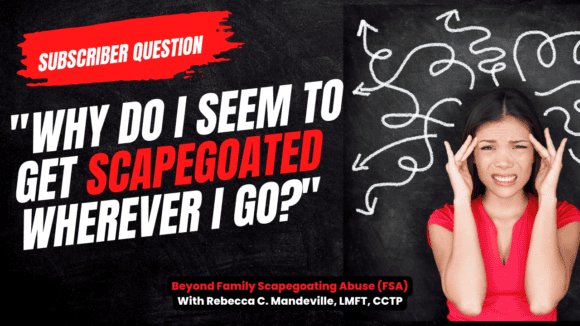
“Why Do I Seem to Get Scapegoated Wherever I Go?
•
New Vlog Release – and announcing a new series on YouTube on my new Beyond Family Scapegoating Abuse Channel, Subscriber Question of the Week: This week’s subscriber question is, “Why do I seem to find myself in the ‘scapegoat’ role wherever I go?”
-

Scapegoat Recovery: The Importance of Addressing Complex Trauma (C-PTSD)
•
Recovering from the traumatizing aspects of family scapegoating abuse (FSA) is an individual process and each FSA adult survivor’s healing journey will be unique. But no matter the recovery route you take, you will want to first ensure you build a strong foundation for recovery by addressing symptoms of complex trauma (C-PTSD).